Skip to content
HeritageYachting
RoutesYachtsAbout usBlog
  • How it worksFrom enquiry to embarkation
  • FAQPrices, booking and boarding
  • ContactWrite to us or call
PrivacyTerms
  • enEnglish
  • deDeutsch
  • trTürkçe
  • ruРусский
Enquire
  • Routes
  • Yachts
  • About us
  • Blog
  • How it worksFrom enquiry to embarkation
  • FAQPrices, booking and boarding
  • ContactWrite to us or call

Language

  • English
  • Deutsch
  • Türkçe
  • Русский

PrivacyTerms

Enquire
HeritageYachting

Crewed gulet and yacht charters between Bodrum and Fethiye.

37°02′N 27°25′E

  • info@heritageyachting.com
  • +90 533 541 24 49
  • Instagram · @heritageyachting

Explore

  • Routes
  • Yachts
  • Blog
  • Enquire

Company

  • About us
  • FAQ
  • Contact

Legal

  • Privacy
  • Terms

© 2026 Heritage Yachting. All rights reserved.

  • English
  • Deutsch
  • Türkçe
  • Русский
  1. Blog
  2. /
  3. The Blue Voyage: a short history of gulet cruising in Turkey

11 October 2026 · 4 min read

The Blue Voyage: a short history of gulet cruising in Turkey

From Bodrum’s sponge-diving boats and a writer’s exile in 1925 to Azra Erhat’s 1962 book and today’s week-long gulet charters.

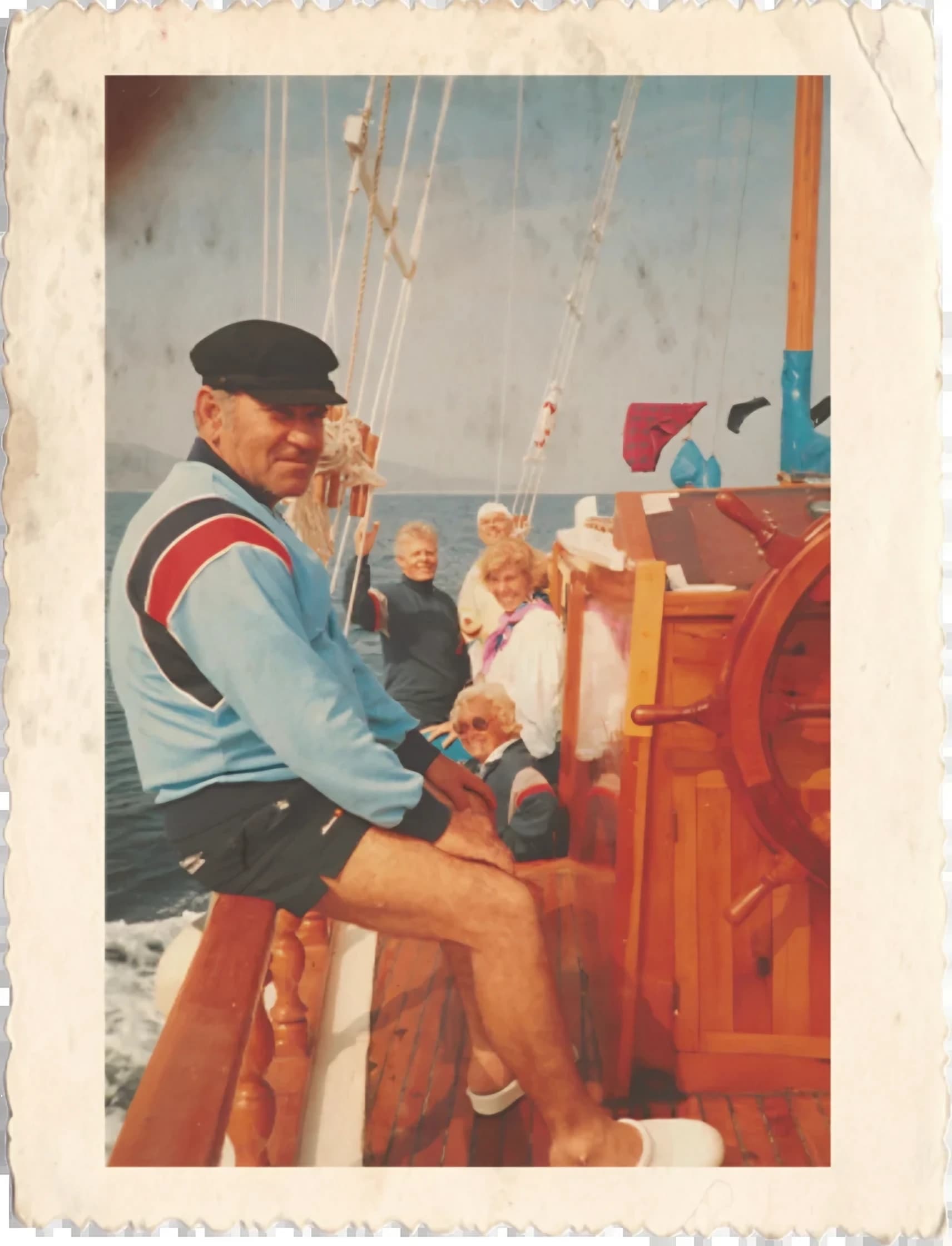
An early voyage from our family album: the captain and guests on the deck of a wooden gulet

In short

The Blue Voyage (Mavi Yolculuk in Turkish) is a week-long cruise on a wooden gulet along Turkey’s southwest coast. It began in the 1940s, when the writer Cevat Şakir Kabaağaçlı — the “Fisherman of Halicarnassus” — and his friends sailed from Bodrum on local working boats. Azra Erhat’s 1962 book made the name famous, and from the 1970s Bodrum’s boatbuilders turned those workboats into the gulets guests sail on today.

In this article

  1. A coast of traders and sponge divers
  2. The writer who was exiled to Bodrum
  3. How the Blue Voyage got its name
  4. From workboat to gulet
  5. The Blue Voyage today
  6. Questions and answers

A coast of traders and sponge divers

Long before anyone sailed here for pleasure, the coast between Bodrum and Fethiye was a working sea. Boats carried goods between harbours and islands, and Bodrum’s sponge divers spent whole summers at sea on sturdy wooden boats built for heavy loads and rough weather.

Our own family comes from that world: our great-grandfathers traded between these islands and then dived for sponges, as we tell in our story. The boats, the bays and the winds of the Blue Voyage were their workplace long before they became a holiday.

The writer who was exiled to Bodrum

In 1925 the writer Cevat Şakir Kabaağaçlı was sentenced to three years of exile in Bodrum, then a quiet fishing town. He fell for the place, stayed long after his sentence ended and wrote about its sea and its people under the name Halikarnas Balıkçısı — the Fisherman of Halicarnassus, after the ancient name of Bodrum.

He sailed into the bays of the Gökova Gulf with local fishermen and sponge divers, and he began to bring friends along: writers, translators and painters who had never seen this coast.

How the Blue Voyage got its name

The first of these trips were made in the mid-1940s: a small group, a local captain, a wooden boat and days spent anchoring in empty coves, swimming, reading and walking to ancient ruins. The classicist Azra Erhat, one of the group, wrote that from 1957 on they sailed every year.

She credited the idea and the name in a single line: if the Fisherman of Halicarnassus founded the Blue Voyage, the writer Sabahattin Eyüboğlu gave it its name. Her book Mavi Yolculuk (“Blue Voyage”), published in 1962, carried that name — and a longing for this coast — to readers all over Turkey.

The painter Bedri Rahmi Eyüboğlu, Sabahattin’s brother, sailed with them too. In 1974 he painted a fish on a rock in a bay near Göcek; it is still there, and the bay now carries his name. You can see it on our Marmaris to Göcek route.

From workboat to gulet

At the end of the 1960s visitors began to reach Bodrum and Marmaris in growing numbers, and many of them wanted to see the bays the writers had described. At the start of the 1970s Bodrum’s boatbuilders answered with a new kind of boat: the strong wooden hull of the local workboats, with what guests needed added on — a wide, shaded deck, a saloon and cabins below. Our family was among the first to welcome guests aboard.

In the 1980s, as more of them were built, a week on a gulet came within reach of many more people, and the Blue Voyage became the holiday it is today. Gulets are still built largely by hand from local pine, in yards such as those of Bodrum and the village of Bozburun.

The Blue Voyage today

The idea has hardly changed. You spend a week aboard a crewed gulet, wake up in a different bay every day, swim before breakfast, have lunch at anchor and dinner on deck. The routes still follow the coast the writers loved: the Gökova Gulf, the Datça peninsula with ancient Knidos, and the islands of Göcek.

To see the whole map, our guide to every route compares them side by side, and what a gulet is explains life aboard.
Questions and answers

Who started the Blue Voyage?

The writer Cevat Şakir Kabaağaçlı, known as the Fisherman of Halicarnassus. Exiled to Bodrum in 1925, he began sailing the nearby bays with friends on local boats. His friend Sabahattin Eyüboğlu named the trips, and Azra Erhat’s 1962 book made them famous.

What does “Mavi Yolculuk” mean?

It is Turkish for “Blue Voyage”: a cruise of about a week on a wooden boat, anchoring in quiet bays along Turkey’s southwest coast.

Where does the Blue Voyage go?

Along the coast between Bodrum and Fethiye: the Gökova Gulf, the Datça and Bozburun peninsulas, Marmaris and the islands of Göcek and Fethiye. See all our routes.

Is a gulet the same as a sponge-diving boat?

It grew out of one. A gulet keeps the strong wooden hull of Bodrum’s working boats, with a wide deck, a saloon and cabins added for guests.

Plan your Blue Voyage

Choose a route and a week and tell us how many of you are coming. We’ll reply with the yachts that are free and a price.

Request prices & availability

In this article

  1. A coast of traders and sponge divers
  2. The writer who was exiled to Bodrum
  3. How the Blue Voyage got its name
  4. From workboat to gulet
  5. The Blue Voyage today
  6. Questions and answers

Plan your Blue Voyage

Choose a route and a week and tell us how many of you are coming. We’ll reply with the yachts that are free and a price.

Request prices & availability

Read next

All articles
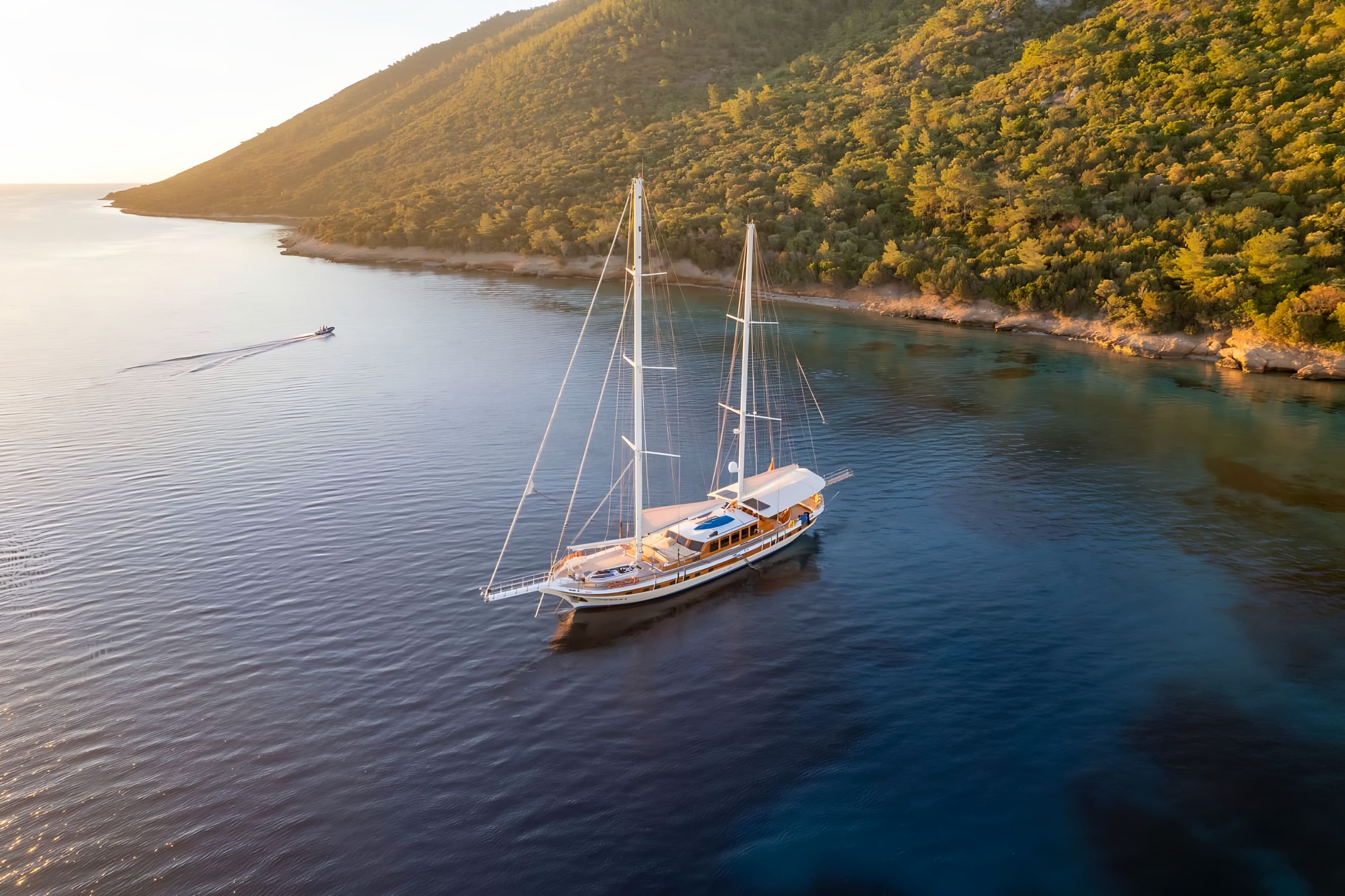
A two-masted wooden gulet at anchor in a calm bay at sunset, below a pine-covered hillside

3 min read

What is a gulet? The wooden yacht of the Turkish coast

How gulets are built, what is on board, who sails them and what a day aboard is like — from a family that has sailed them for generations.

Read the article

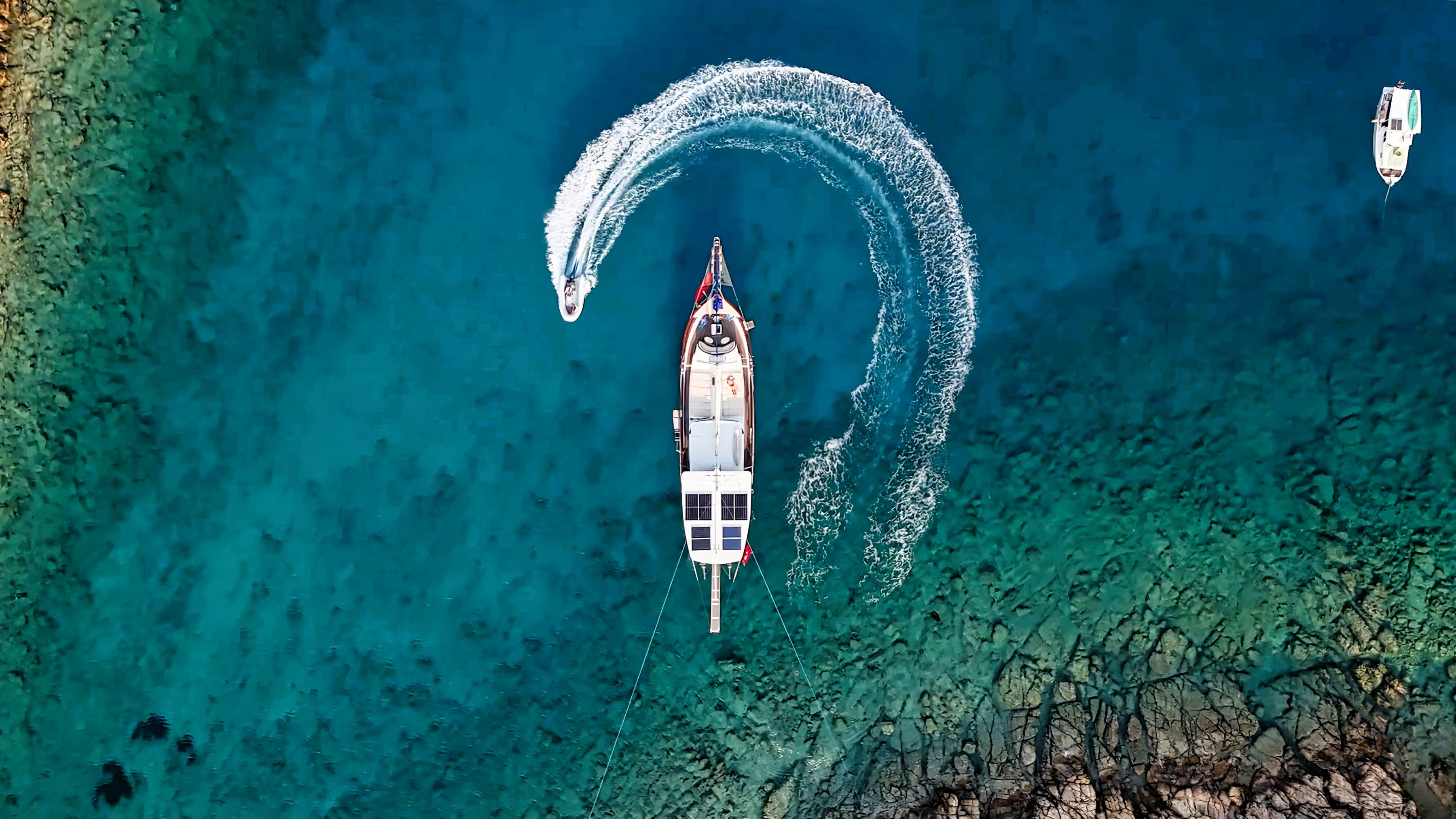
Seen from above: a gulet at anchor in clear turquoise water, her tender circling beside her

3 min read

When is the best time for a Blue Voyage? A month-by-month guide

Sea temperatures, the meltem wind and the busy weeks: how to choose the best month for a gulet cruise on the Turkish coast, from May to October.

Read the article

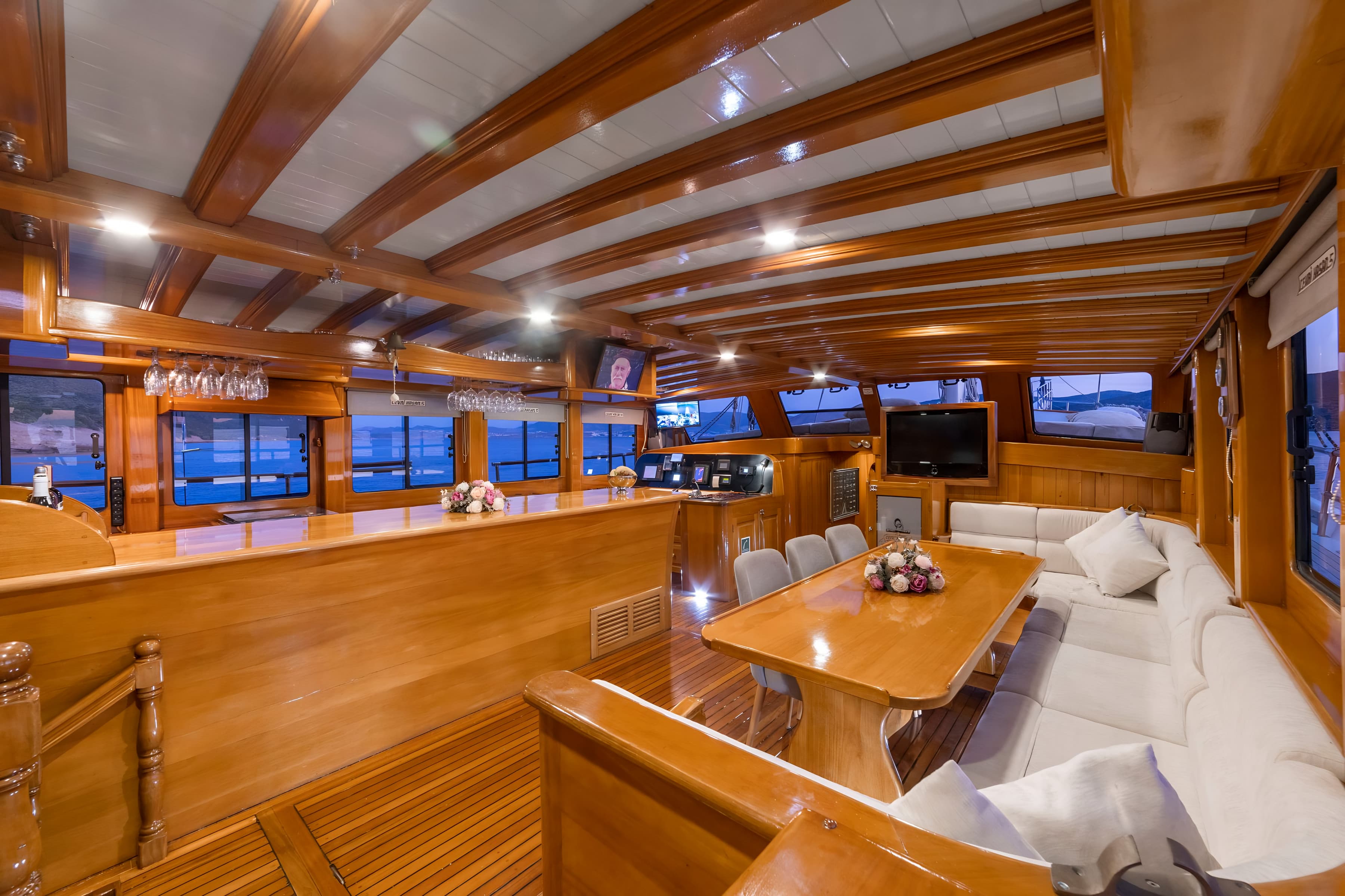
The wooden saloon of a gulet, with a dining table, a long white sofa and a bar

3 min read

What is included in a gulet charter? Prices, meals and payment explained

What the weekly price of a gulet covers, why meals are separate, how the deposit and balance work, and what to tell us before you sail.

Read the article